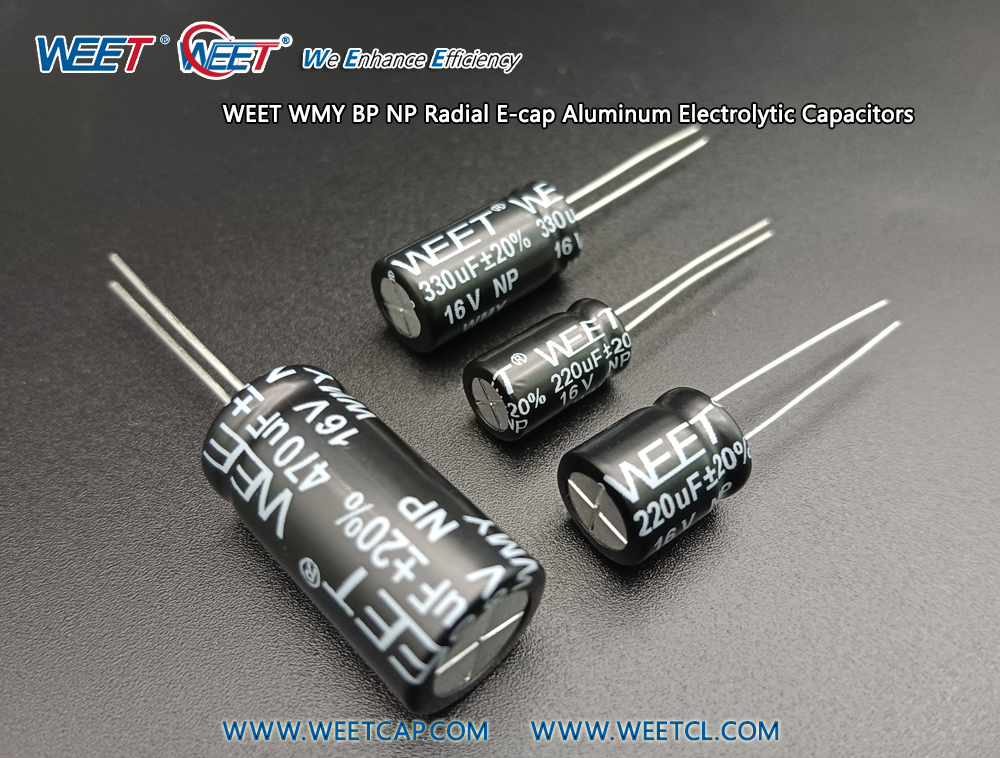
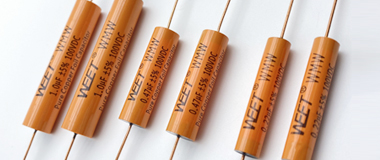
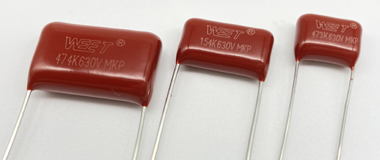
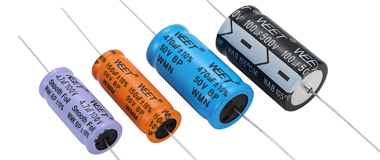
Audio non-polar aluminum electrolytic capacitors, radial lead type (Bi pole) (bipolar) series of aluminum electrolytic capacitors, are different from the usual explanation path starting from electrical principles. The starting point for understanding such capacitors is their most intuitive physical form. The so-called "radial lead" refers to two electrode leads extending parallel from the same end of the capacitor body, which is in contrast to the "axial lead" (leads extending from both ends of the body). This structure determines that it is vertically installed on the circuit board, occupying the projected area of the plane rather than the height space. For industrial control board designs that pursue high-density integration, this is a more optimal way of space utilization.
The shell is usually composed of an aluminum metal sleeve and a rubber sealing plug. The sealing plug is a key barrier for long-term reliability, which not only firmly fixes the two leads, but also strictly prevents the evaporation of internal electrolyte and the invasion of external moisture. For capacitors applied in industrial environments that may be accompanied by vibration and temperature cycling, the mechanical strength and chemical stability requirements of the sealing structure are more stringent than those of ordinary commercial grade products.
Non polarized aluminum electrolytic capacitor: low impedance, bipolar, high temperature resistance
Packaging: Vertical (radial) NP electrolytic capacitor
Main application: Frequency division circuit for audio systems
Bypass (decoupling): providing a low impedance path for certain parallel components in an AC circuit
Characteristics: From ordinary to special (high-frequency low impedance electrolytic capacitors, special size electrolytic capacitors)
The product is mainly used for communication products (power supply, main pole plate), audio and frequency dividers (splitters), audio amplifiers, automotive electronics and other products, speakers, and loudspeakers.